
The role of polymer testing labs in enhancing vehicle dynamics
-
Vehicle refinement depends heavily on understanding how materials behave under real operating conditions. NVH testing is used to evaluate noise, vibration, and harshness levels that influence ride comfort and perceived quality. As vehicle systems become lighter and more complex, material behavior has a growing impact on NVH outcomes. Polymers used in mounts, bushings, and isolators play a crucial role in controlling vibration transmission across vehicle structures. Accurate characterization of these materials ensures that NVH evaluations reflect real-world performance rather than theoretical assumptions.
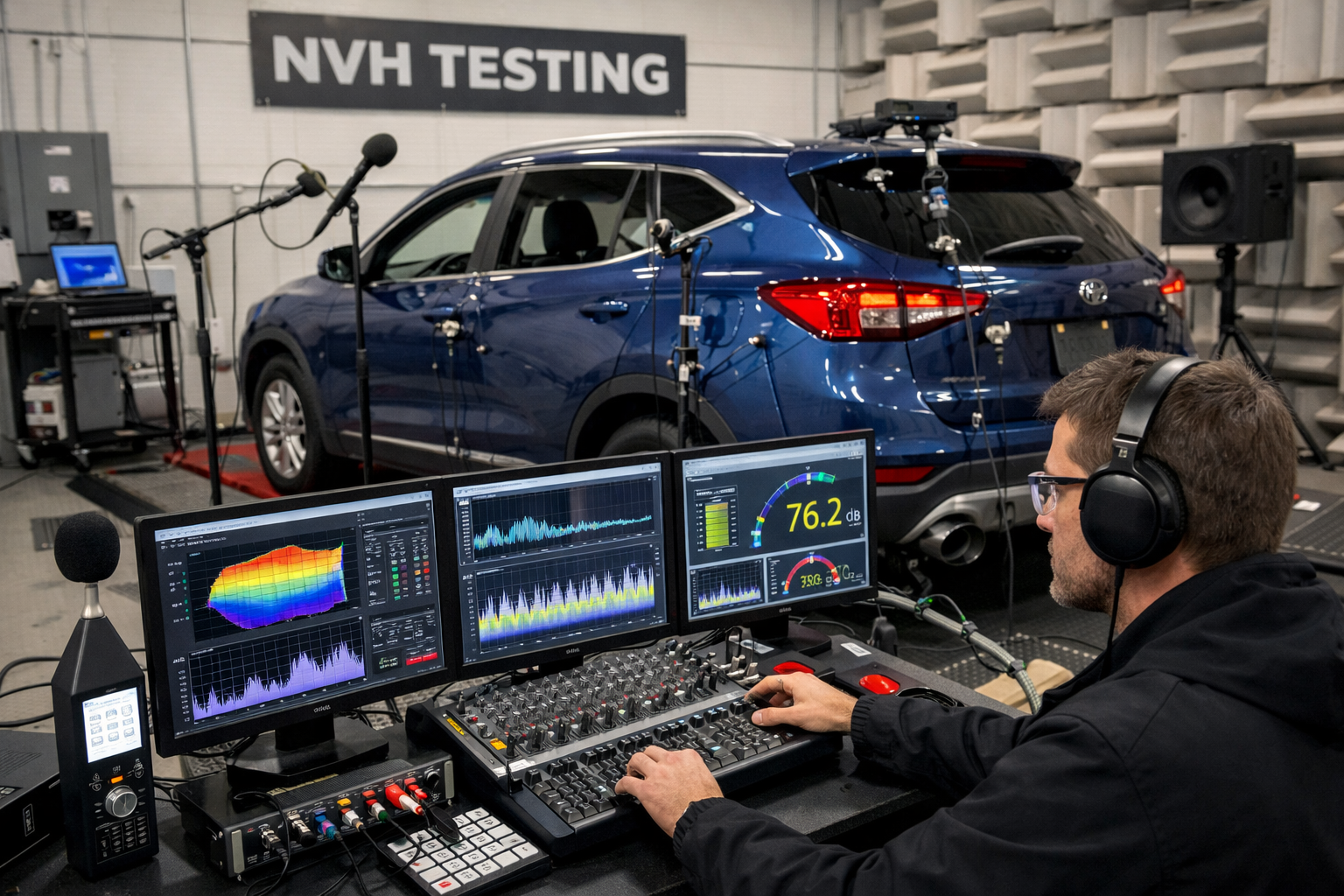
Influence of Polymer Properties on Vehicle Dynamics
The interaction between materials and motion is central to vehicle dynamics. Polymer components act as interfaces between rigid parts, influencing stiffness, damping, and load transfer. Variations in polymer behavior can alter suspension response, steering feedback, and ride stability.
Through structured polymer testing, engineers gain insight into how materials respond to cyclic loading, temperature changes, and frequency variations. This data allows designers to align polymer properties with desired vehicle dynamics targets while maintaining effective vibration isolation.
Role of Polymer Testing Labs in NVH Development
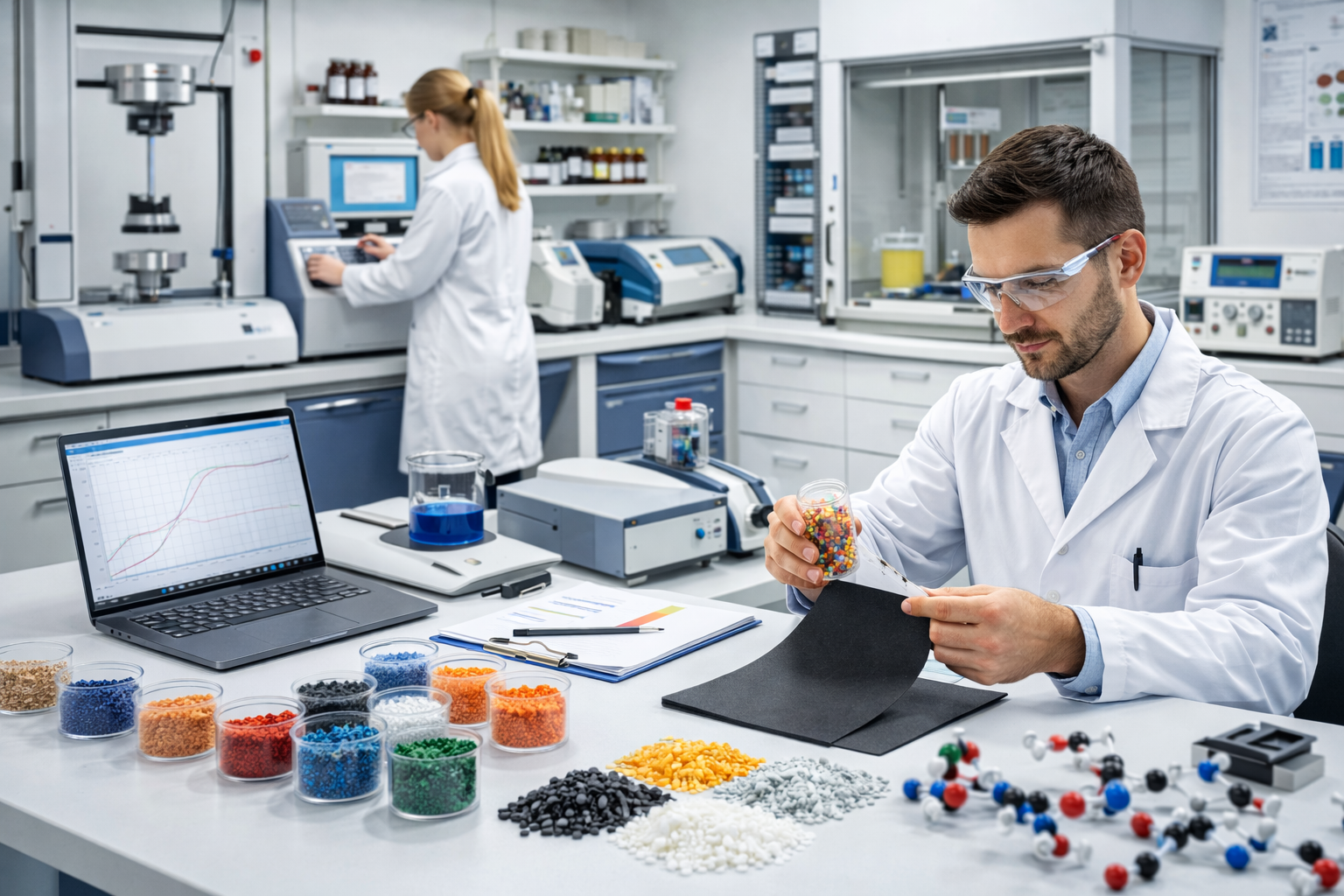
A dedicated polymer testing lab provides the controlled environment required to evaluate material behavior under simulated service conditions. These labs conduct tests such as dynamic mechanical analysis, fatigue endurance, compression set evaluation, and thermal aging. Each test generates critical inputs for both component design and NVH testing programs.
By producing consistent and repeatable data, a polymer testing lab helps reduce uncertainty during NVH validation. Engineers can correlate bench-level results with full-vehicle measurements more accurately, improving confidence in test outcomes.
Improving Test Correlation and Design Validation
One of the biggest challenges in NVH development is achieving strong correlation between simulation models and physical test results. Inaccurate material inputs often lead to discrepancies that delay validation. Integrating results from polymer testing into vehicle dynamics simulations enhances model accuracy.
When simulations accurately reflect real material behavior, NVH testing becomes more efficient and predictive. Potential issues such as resonance, vibration amplification, or noise transmission can be identified earlier in the development cycle.
Supporting Advanced Vehicle Platforms and Technologies
Modern vehicle platforms, including electric and hybrid systems, introduce new NVH challenges. High-frequency motor noise and increased structural sensitivity demand more precise vibration control. Polymers with optimized damping properties are essential for managing these conditions.
Accurate polymer testing within a specialized polymer testing lab ensures materials perform consistently across a wide operating range. This support enables balanced vehicle dynamics without compromising acoustic comfort or durability.
Enhancing Durability and Lifecycle Performance
Vehicles are exposed to millions of load cycles throughout their service life. Over time, polymers may experience fatigue, creep, or environmental degradation. Without proper validation, these changes can negatively affect NVH performance.
Testing in a controlled polymer testing lab helps predict long-term behavior and supports durability-focused NVH testing. This approach allows manufacturers to design components that maintain stable vehicle dynamics and consistent ride quality over time.
Integrated Validation with Specialized Rubber Facilities
In the final stages of development, insights from a rubber research lab support compound optimization and material innovation for NVH-critical components. Verification conducted in a rubber testing lab confirms material consistency, durability, and compliance with industry requirements. When data from these facilities is aligned with NVH testing, vehicle dynamics, and polymer testing lab outputs, manufacturers achieve higher accuracy, reduced development risk, and enhanced vehicle refinement.
Also Read :