Categories
Tags
-
#battery environmental testing
#battery test chamber
#environmental testing of electronics
#automotive test chambers
#aerospace testing chamber
#gas testing chamber
#Salt spray chamber working
#dust simulation chamber
#What is ipx 4
#IP5X test chamber
#Blowing Dust Test
#LIB Industry
#cold climate chamber
#environmental chamber for sale
Archives
The working principle of Gas Test Chamber
-
Table of Content [Hide]
1. Key Components:
2. Working Principle
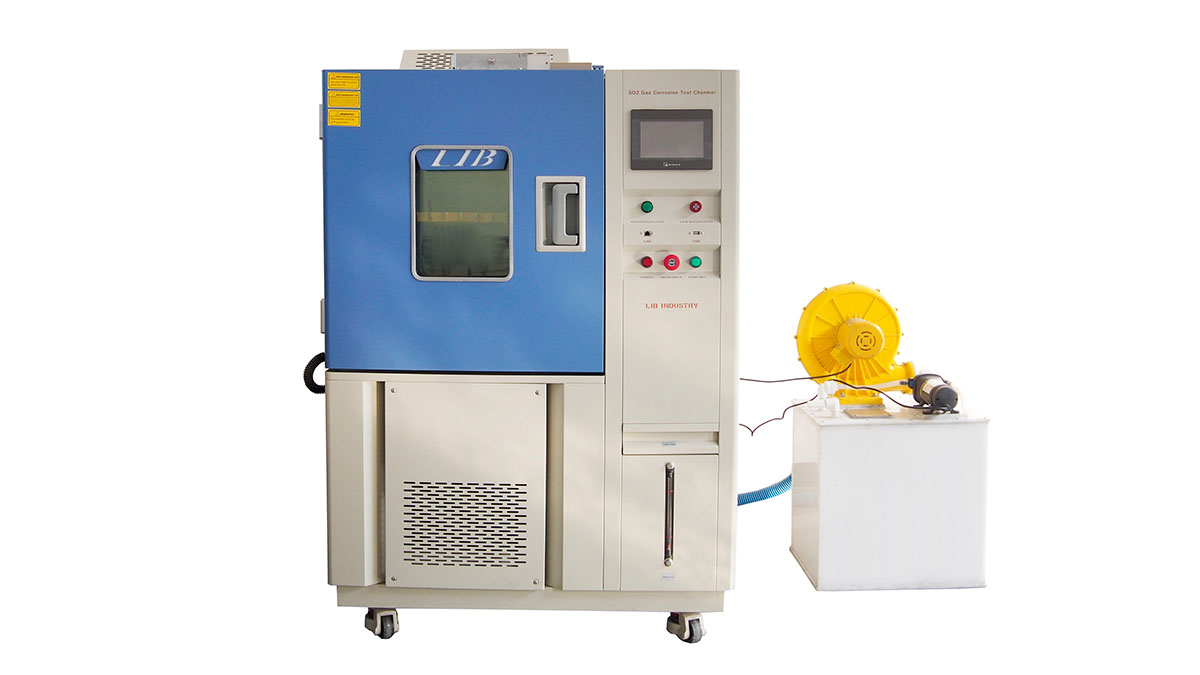
The working principle of a gas testing chamber is based on simulating specific gas conditions in a controlled environment to test the performance of materials or products. Below are the basic working principles and key components of a Gas Test Chamber
Key Components:
1、Test Chamber Body: A sealed chamber, typically made of stainless steel or other corrosion-resistant materials, designed to hold the samples being tested.
2、Gas Supply System: Includes gas sources, gas regulators, flow meters, and pipelines for delivering specific test gases into the chamber.
3、Control System: Comprising microprocessors or Programmable Logic Controllers (PLC) for setting and monitoring test parameters.
4、Sensors: Used to monitor and provide feedback on parameters such as temperature, humidity, pressure, and gas concentration within the chamber.
5、Data Recorder: Records all data during the test process for subsequent analysis.
6、Safety Devices: Includes emergency stop buttons, gas leak detectors, exhaust systems, etc., to ensure operational safety.
Working Principle
Preparation Phase:
2、Place the sample to be tested into the chamber.
1、Set the test parameters, such as gas type, concentration, temperature, humidity, and test duration.
Gas Filling:
1、Open the gas supply system and introduce the test gas into the chamber.
2、Adjust the gas flow using flow meters and control valves to achieve the desired concentration.
3、Sensors monitor the gas concentration until the set stable state is reached.
Testing Phase:
1、Once the set test conditions are reached, the timing begins.
2、The control system maintains stable gas conditions inside the chamber while monitoring and recording environmental parameters.
3、The sample is exposed to the set gas environment for a specific period, simulating actual use or storage conditions.
Data Recording and Analysis:
1、During the test, the data recorder logs data such as temperature, humidity, pressure, and gas concentration.
2、After the test, analyze the recorded data to evaluate the performance changes in the sample.
Completion and Exhaust:
1、After the test, close the gas supply system.
2、Open the exhaust system to release the gas from the chamber, ensuring the chamber returns to a safe state.
3、Remove the sample for further analysis or evaluation.
By precisely controlling the internal environment, the Gas Test Chamber can simulate various gas conditions, helping researchers and engineers evaluate the performance and reliability of materials or products under different environmental conditions.
If you are looking for a reliable environmental chamber manufacturer, please contact us.