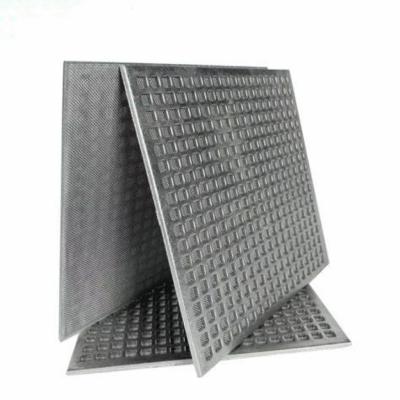
Stainless Steel Perforated Sintered Wire Mesh
-
Posted by Tengfei Zhang Filed in Entertainment #Stainless Steel Perforated Sintered Wire Mesh 35 views
In modern industrial applications, the demand for materials that offer both durability and precision has led to the development of advanced filtration and structural media. Among them, stainless steel perforated sintered wire mesh stands out as one of the most efficient and reliable materials used across various industries, including petrochemical, pharmaceutical, food processing, and environmental engineering. This innovative mesh combines the advantages of perforated metal and multi-layer sintered wire mesh to deliver superior mechanical strength, excellent filtration performance, and extended service life.
What Is Stainless Steel Perforated Sintered Wire Mesh?
Stainless steel perforated sintered wire mesh is a composite structure that integrates a perforated stainless steel plate with multiple layers of stainless steel woven wire mesh through a high-temperature sintering process. The sintering process involves diffusion bonding under vacuum or controlled atmosphere conditions, which fuses the layers together permanently without the need for adhesives or welds.
The perforated metal sheet serves as the supporting or protective layer, while the sintered wire mesh provides precise filtration capabilities. This structure results in a product that possesses excellent rigidity, high pressure resistance, and consistent pore distribution, making it ideal for demanding applications that require both mechanical stability and fine filtration.

Key Features and Advantages
-
Exceptional Mechanical Strength
The integration of a perforated metal layer significantly enhances the overall strength and rigidity of the sintered mesh. This makes it capable of withstanding high pressure and mechanical stress, allowing it to be used in systems that operate under extreme conditions. -
Uniform and Stable Filtration Accuracy
The sintering process ensures uniform pore sizes throughout the mesh layers. This provides consistent filtration performance and ensures particle retention without compromising flow rate, which is critical in precision filtration systems. -
High Temperature and Corrosion Resistance
Made from high-grade stainless steel materials such as 304, 316L, or 904L, the mesh exhibits excellent resistance to corrosion, oxidation, and chemical attack. It can operate continuously under temperatures exceeding 600°C, making it suitable for harsh industrial environments. -
Reusable and Easy to Clean
Unlike disposable filter media, stainless steel perforated sintered wire mesh can be backwashed, ultrasonically cleaned, or regenerated multiple times without losing its structural integrity or filtration efficiency. -
Customizable Design Options
The metal mesh can be tailored in terms of thickness, perforation size, wire mesh layers, and filtration ratings (typically ranging from 1 to 200 microns), allowing it to meet specific customer requirements for different applications.
Applications of Stainless Steel Perforated Sintered Wire Mesh
The versatility and durability of this material make it an indispensable component in numerous industries:
-
Petrochemical and Refining Industry
Used in polymer filtration, catalyst recovery, and gas-liquid separation, where stable filtration performance under high pressure and temperature is critical. -
Water and Wastewater Treatment
Ideal for filtration and purification systems, including desalination plants, groundwater filtration, and sludge dewatering. -
Pharmaceutical and Food Processing
Ensures clean and sterile production environments by filtering out contaminants and maintaining hygiene standards during material processing. -
Aerospace and Automotive Industry
Employed in hydraulic systems, lubrication filtration, and exhaust treatment to ensure optimal performance and extended service life of machinery. -
Power Generation and Energy Systems
Used in gas turbines, fuel cells, and renewable energy systems for precise fluid control and effective contamination removal.
Comparison with Traditional Filter Media
Compared to conventional woven wire mesh, fiber felt, or paper-based filter elements, stainless steel perforated sintered wire mesh offers distinct advantages. Its sintered bonding eliminates issues of layer separation and deformation, ensuring long-term dimensional stability. The perforated support layer provides additional strength that prevents collapse under high flow or differential pressure conditions, unlike traditional filter elements that may deform or tear during operation.
Maintenance and Longevity
The robust design and corrosion-resistant nature of stainless steel perforated sintered wire mesh make it highly durable. Regular maintenance involves cleaning the mesh using chemical solvents or ultrasonic cleaning systems to remove trapped contaminants. This reusability translates into significant cost savings over time compared to disposable filter media.
Conclusion
The stainless steel perforated sintered wire mesh represents a breakthrough in modern filtration and structural support technology. By combining the rigidity of perforated metal with the precision of sintered wire mesh, it provides unmatched strength, stability, and filtration accuracy. Its resistance to heat, pressure, and corrosion makes it suitable for use in some of the most demanding industrial environments worldwide.
For engineers and manufacturers seeking a long-lasting, high-performance filtration solution, stainless steel perforated sintered wire mesh offers the perfect balance of durability, efficiency, and cost-effectiveness. As industries continue to pursue cleaner, safer, and more efficient processes, this advanced material will remain a cornerstone of reliable filtration and separation technology.
-
