Categories
Tags
-
# health
#Rossmax Blood Pressure Monitor Kit
#Blood Pressure Monitor Kit
#Blood Pressure Kit
#wishmed
#Self-Sealing Autoclave
#Autoclave Pouch
#Self Sealing Pouch
#Dental Bibs
#Wooden Tongue Depressors
#Tongue Depressors
#Dental Bib
#Saliva Ejector
#Saliva Ejector Wishmed
#Pediatric Crowns
#Pediatric Crown
Archives
Role of Pediatric Crowns in Preventing Further Tooth Decay
-
Posted by wISHMED Australia Filed in Health # health #wishmed #Pediatric Crowns #Pediatric Crown 44 views
Tooth decay in children is one of the most common oral health problems worldwide. Baby teeth may be temporary, but the damage caused by untreated cavities can have long-lasting effects on a child’s oral development, nutrition, speech, and confidence. When decay becomes extensive, simple fillings may no longer be enough. This is where pediatric crowns play a critical role in preventing further tooth decay and protecting young smiles.
In this article, WishMed explains how pediatric crowns work, why they are essential for decayed primary teeth, and how they help maintain long-term oral health in children.

Understanding Tooth Decay in Children
Tooth decay occurs when bacteria in the mouth produce acids that erode tooth enamel. In children, decay often progresses faster because baby teeth have thinner enamel and dentin layers. Common causes include:
-
Frequent consumption of sugary snacks and drinks
-
Poor oral hygiene habits
-
Prolonged bottle feeding or nighttime milk intake
-
Lack of fluoride exposure
If left untreated, decay can spread quickly, leading to pain, infection, early tooth loss, and damage to developing permanent teeth.
What Are Pediatric Crowns?
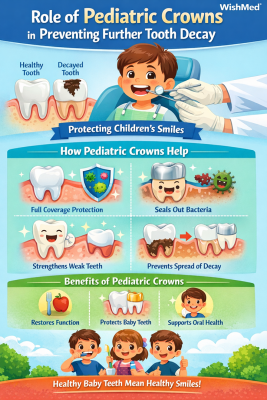
A pediatric crown is a protective cap placed over a child’s damaged or decayed tooth. Unlike fillings, which only repair part of the tooth, crowns fully cover the tooth surface, restoring its shape, strength, and function.
Pediatric crowns are specially designed for children’s teeth and are commonly made from materials such as:
-
Stainless steel (highly durable and cost-effective)
-
Zirconia (tooth-colored and aesthetically pleasing)
-
Resin or composite materials (used in selected cases)
Dentists often recommend crowns for baby teeth with extensive decay, fractures, or after pulp therapy procedures.
How Pediatric Crowns Prevent Further Tooth Decay
1. Complete Coverage of the Tooth
One of the biggest advantages of pediatric crowns is that they fully seal the tooth, leaving no exposed areas where bacteria can enter. This full coverage significantly reduces the risk of recurrent decay around treated teeth.
2. Protection After Pulp Therapy
When a child undergoes procedures like pulpotomy or pulpectomy (removal of infected pulp tissue), the tooth becomes more fragile. A crown protects the treated tooth from breaking and prevents bacteria from re-infecting the inner structure.
3. Long-Term Durability
Compared to fillings, pediatric crowns are far more durable. Children chew hard foods, grind their teeth, and may not always follow ideal oral care routines. Crowns withstand these challenges better, reducing the need for repeat dental treatments.
4. Prevents Spread of Bacteria
Untreated or partially treated cavities can act as a bacterial reservoir, increasing the risk of decay spreading to nearby teeth. By sealing the tooth completely, crowns help stop the progression of decay and protect surrounding teeth.
5. Maintains Proper Tooth Structure
Crowns restore the natural shape of the tooth, allowing proper chewing and spacing. This prevents food impaction, which can otherwise increase plaque accumulation and decay risk.
Importance of Pediatric Crowns for Baby Teeth
Many parents wonder whether it’s worth treating baby teeth since they eventually fall out. However, preserving primary teeth is crucial because they:
-
Guide permanent teeth into correct positions
-
Support normal chewing and speech development
-
Prevent orthodontic problems caused by early tooth loss
-
Maintain facial structure and jaw development
Pediatric crowns help ensure that decayed baby teeth remain functional until their natural exfoliation time.
Aesthetic and Psychological Benefits
Modern pediatric crowns, especially zirconia crowns, offer excellent aesthetics. Children can smile confidently without visible metal, which is especially important for front teeth. A positive dental experience also reduces dental anxiety and encourages lifelong oral care habits.
When Are Pediatric Crowns Recommended?
Dentists commonly suggest pediatric crowns in cases such as:
-
Large cavities that cannot be restored with fillings
-
Recurrent decay after previous fillings
-
Teeth weakened after pulp therapy
-
Fractured or broken baby teeth
-
Children with high cavity risk or poor oral hygiene compliance
Early intervention with crowns can prevent pain, infection, and emergency dental visits.
Role of Quality Dental Supplies in Pediatric Crowns
The success of pediatric crown treatment depends not only on clinical expertise but also on the quality of dental materials used. Reliable dental supplies ensure proper fit, durability, and safety for young patients.
WishMed supports dental professionals by offering high-quality medical and dental consumables that meet international standards. Using trusted products enhances treatment outcomes and ensures better protection against future tooth decay.
Post-Crown Care: Preventing Future Decay
While pediatric crowns are highly effective, maintaining oral hygiene remains essential. Parents should:
-
Help children brush twice daily with fluoride toothpaste
-
Limit sugary snacks and drinks
-
Encourage regular dental checkups
-
Teach proper flossing habits
-
Monitor any discomfort or looseness around crowns
With good care, pediatric crowns can last until the baby tooth naturally falls out.
Conclusion
The role of pediatric crowns in preventing further tooth decay cannot be overstated. By providing full coverage, long-term protection, and structural stability, crowns safeguard damaged baby teeth and promote healthy oral development in children.
For parents and dental professionals alike, pediatric crowns represent a proactive, reliable solution to combat childhood tooth decay. With the right treatment approach and high-quality dental supplies from trusted providers like WishMed, children can enjoy healthier smiles and fewer dental complications in the future.
-
