Categories
Tags
-
# health
#Rossmax Blood Pressure Monitor Kit
#Blood Pressure Monitor Kit
#Blood Pressure Kit
#wishmed
#Self-Sealing Autoclave
#Autoclave Pouch
#Self Sealing Pouch
#Dental Bibs
#Wooden Tongue Depressors
#Tongue Depressors
#Dental Bib
#Saliva Ejector
#Saliva Ejector Wishmed
#Pediatric Crowns
#Pediatric Crown
Archives
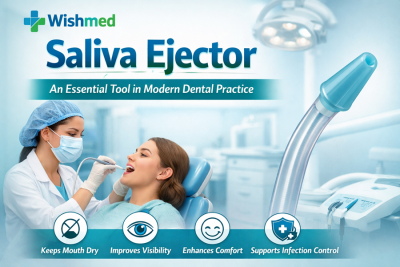
Saliva Ejector: An Essential Tool in Modern Dental Practice
-
In modern dentistry, maintaining a clean, dry, and comfortable oral environment during treatment is extremely important. One small but highly effective device that plays a major role in achieving this is the saliva ejector. Though simple in design, a saliva ejector is a vital instrument used daily in dental clinics and hospitals across the world.
This article explains what a saliva ejector is, how it works, its types, benefits, and why it is an essential part of every dental practice.
What Is a Saliva Ejector?
A saliva ejector is a low-volume suction device used in dental procedures to remove saliva, blood, water, and debris from a patient’s mouth. It helps keep the oral cavity dry, allowing dentists to perform procedures efficiently and accurately.
Typically made from medical-grade plastic, a saliva ejector consists of a flexible tube attached to a suction system. The tip is placed inside the patient’s mouth to continuously remove fluids without causing discomfort.

How Does a Saliva Ejector Work?
The working principle of a saliva ejector is simple:
-
The device is connected to a dental suction unit
-
Gentle suction continuously removes excess saliva and fluids
-
The dentist or dental assistant positions the tip near the treatment area
-
Fluids are safely collected and disposed of through the suction system
Unlike high-volume suction, saliva ejectors operate at low suction pressure, making them comfortable for patients and suitable for long dental procedures.
Types of Saliva Ejectors
There are mainly two types of saliva ejectors used in dental clinics:
1. Disposable Saliva Ejectors
Disposable saliva ejectors are designed for single use and are widely preferred due to hygiene and infection control standards.
Advantages:
-
Reduces risk of cross-infection
-
No need for cleaning or sterilization
-
Time-saving and cost-effective
-
Ideal for high-patient-volume clinics
2. Reusable Saliva Ejectors
Reusable saliva ejectors are made of durable materials and can be sterilized after use.
Advantages:
-
Environmentally friendly
-
Lower long-term cost
-
Suitable for clinics with proper sterilization facilities
However, due to strict infection control guidelines, disposable saliva ejectors are more commonly used today.
Importance of Saliva Ejector in Dentistry
A saliva ejector plays a crucial role in dental treatments for both dentists and patients.
1. Maintains a Dry Working Area
Many dental procedures such as fillings, root canals, and crown placements require a dry environment. Saliva ejectors help maintain dryness for better precision.
2. Improves Visibility
By removing saliva and water, dentists get a clear view of the treatment area, reducing errors and improving outcomes.
3. Enhances Patient Comfort
Patients do not have to swallow continuously during treatment. This reduces anxiety and makes long procedures more comfortable.
4. Supports Infection Control
Disposable saliva ejectors minimize the risk of contamination and ensure a safer clinical environment.
5. Saves Time
Continuous suction eliminates frequent interruptions, allowing dentists to complete procedures faster.
Uses of Saliva Ejector in Dental Procedures
Saliva ejectors are used in a wide range of dental treatments, including:
-
Dental cleanings and scaling
-
Cavity fillings
-
Root canal treatments
-
Cosmetic dentistry procedures
-
Pediatric dental treatments
-
Oral surgeries (supportive use)
In pediatric dentistry, saliva ejectors are especially helpful as they are gentle and less intimidating for children.
Saliva Ejector vs High-Volume Suction
Many people confuse saliva ejectors with high-volume suction systems, but both serve different purposes.
Feature Saliva Ejector High-Volume Suction Suction Power Low High Patient Comfort Very comfortable Less comfortable Noise Level Quiet Loud Best Use Long procedures, moisture control Heavy fluid and debris removal Most dental clinics use both systems together for optimal results.
How to Choose the Right Saliva Ejector
When selecting a saliva ejector for your dental clinic, consider the following factors:
-
Material quality (medical-grade, non-toxic plastic)
-
Flexibility and shape retention
-
Smooth edges for patient comfort
-
Compatibility with suction units
-
Disposable or reusable requirement
-
Cost and bulk availability
Choosing a reliable saliva ejector improves workflow efficiency and patient satisfaction.
Hygiene and Safety Considerations
Maintaining hygiene while using saliva ejectors is essential:
-
Always use disposable saliva ejectors for single patients
-
Do not reuse disposable units
-
Follow proper biomedical waste disposal guidelines
-
Ensure suction systems are cleaned regularly
Proper usage helps prevent cross-contamination and meets dental regulatory standards.
Benefits of Disposable Saliva Ejectors
Disposable saliva ejectors have become the industry standard due to several benefits:
-
Enhanced infection control
-
No sterilization required
-
Reduced operational workload
-
Consistent performance
-
Cost-effective for clinics
These advantages make disposable saliva ejectors ideal for modern dental practices.
Conclusion
A saliva ejector may appear to be a simple dental accessory, but its role in ensuring smooth, hygienic, and comfortable dental treatments is significant. From maintaining a dry working field to enhancing patient comfort and supporting infection control, saliva ejectors are indispensable in every dental clinic.
By choosing high-quality saliva ejectors and following proper hygiene protocols, dental professionals can improve treatment efficiency, patient experience, and overall clinical safety. As dentistry continues to evolve, the saliva ejector remains a small yet essential tool that supports high standards of oral healthcare.
-
