The Impact of Regulatory Changes on Commercial Disputes in Indi
-
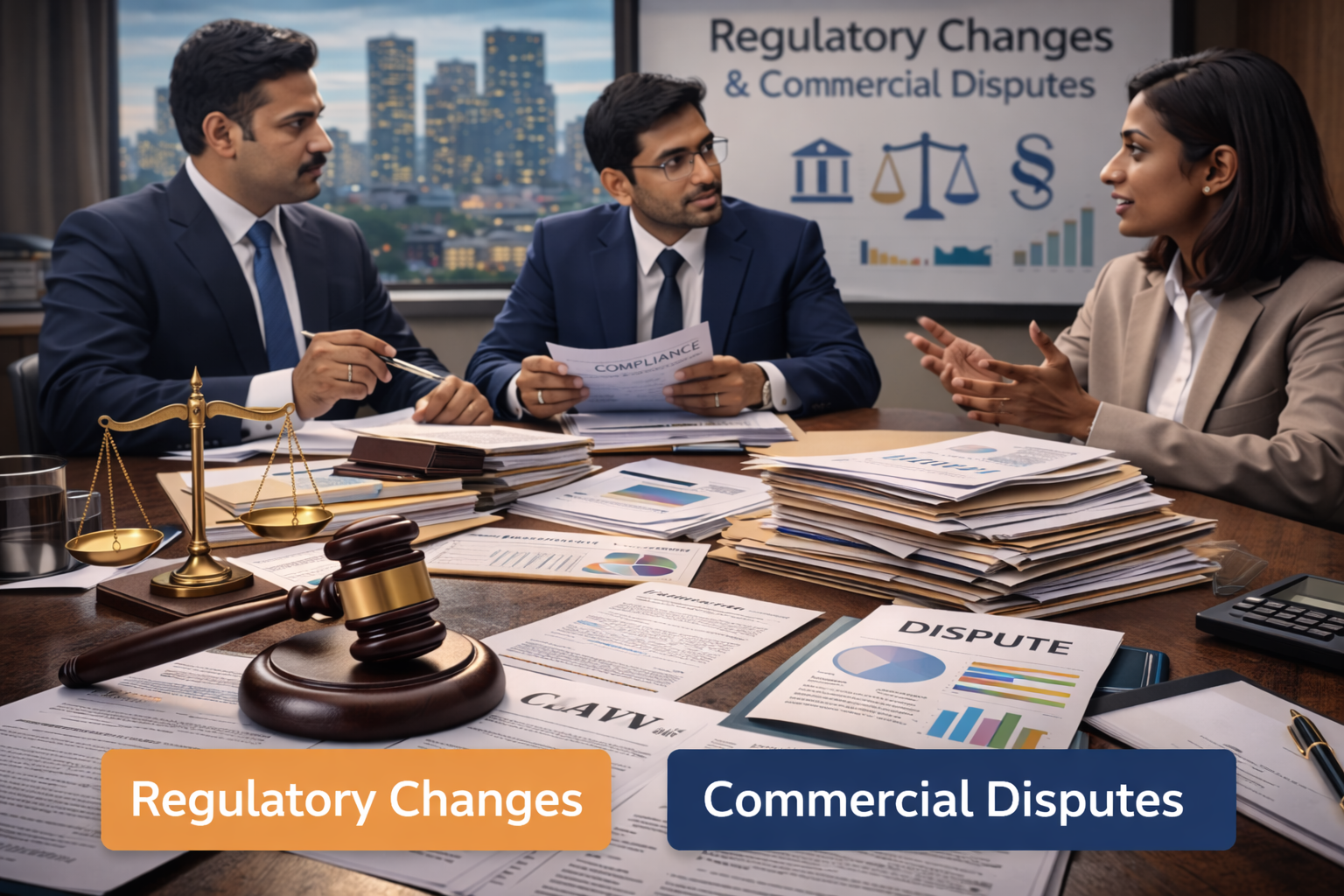
India’s regulatory framework has undergone substantial reform over the past decade. Legislative amendments, sector specific guidelines and digital compliance systems have reshaped the business environment. While these reforms aim to promote transparency and economic growth, they have also influenced the nature and volume of commercial disputes.
Regulatory change often creates transitional uncertainty. Businesses must adapt quickly to evolving rules. Where compliance gaps arise or contractual obligations intersect with new regulations, disputes follow. In 2026, regulatory transformation remains a key driver of commercial litigation and arbitration across India.
This article examines how regulatory developments are influencing commercial disputes and how businesses can manage related risks.
Expansion of Regulatory Oversight
Regulators across sectors have strengthened enforcement mechanisms. Authorities such as the Securities and Exchange Board of India and the Reserve Bank of India have enhanced supervisory frameworks.
Digital reporting systems and analytics tools enable closer scrutiny of corporate conduct. Compliance failures are identified more swiftly than in the past.
Increased oversight has led to more enforcement proceedings. Corporate entities facing regulatory action often engage in parallel civil disputes with counterparties or shareholders.
As scrutiny intensifies, regulatory compliance becomes closely linked with dispute exposure.
Corporate Law Reforms and Governance Disputes
Amendments to the Companies Act and related rules have strengthened governance standards. Disclosure obligations, director responsibilities and reporting requirements have become more detailed.
While these reforms enhance accountability, they also create potential for conflict. Shareholder disputes involving allegations of mismanagement or non compliance have increased.
Oppression and mismanagement petitions are more frequently filed in corporate tribunals. Board level disagreements may escalate into formal proceedings.
Governance reform therefore influences the rise in corporate disputes.
Insolvency Framework and Creditor Claims
The Insolvency and Bankruptcy Code has transformed creditor recovery mechanisms. It provides a structured process for resolving corporate insolvency within defined timelines.
However, the introduction of this framework has also generated disputes. Creditors challenge admission of insolvency petitions. Promoters contest resolution plans. Operational creditors seek recognition of claims.
Commercial courts and tribunals handle complex insolvency litigation involving high value stakes.
Regulatory reform in insolvency law has therefore reshaped dispute dynamics in the financial sector.
Taxation Changes and Litigation
Reforms in direct and indirect taxation have influenced commercial disputes significantly. The introduction of Goods and Services Tax unified indirect taxation across states.
While GST simplified many aspects of tax administration, transitional issues led to interpretational disputes. Businesses challenged assessments and sought clarification on input tax credit eligibility.
Income tax reforms and digital assessment systems have also increased scrutiny.
Tax related disputes often intersect with contractual relationships. Parties may seek indemnity or compensation based on tax liability arising from regulatory changes.
Taxation reform remains a major source of commercial litigation.
Sector Specific Regulatory Developments
Different industries face unique regulatory frameworks. Amendments in these sectors often trigger contractual renegotiation or dispute.
Financial Services
Banking and fintech companies operate under strict regulatory guidelines. Changes in capital adequacy norms or digital payment rules may affect contractual performance.
Telecommunications
Licensing conditions and spectrum regulations influence commercial agreements between operators and service providers.
Renewable Energy
Policy revisions regarding tariffs and incentives have led to disputes between developers and authorities.
Cities such as Mumbai and New Delhi host numerous regulatory bodies and commercial courts handling such matters.
Sector specific reforms often require contractual adaptation. Where parties fail to align expectations, disputes arise.
Contractual Risk Allocation and Regulatory Change
Modern contracts frequently include change in law clauses. These provisions allocate risk if regulatory developments affect performance or cost.
However, ambiguity in drafting can lead to disagreement. Parties may dispute whether a regulatory amendment qualifies as a change in law event.
Such disputes often proceed to arbitration or commercial courts.
Businesses are increasingly seeking clarity in drafting to reduce future litigation.
Professional guidance in areas related to commercial dispute resolution in india has become essential when interpreting regulatory impact on contractual rights.
Competition Law and Market Conduct
India’s competition law regime has grown more active. The Competition Commission of India monitors anti competitive practices and market dominance.
Investigations into cartelisation or abuse of dominance may lead to follow on civil claims.
Corporate entities facing penalties often encounter shareholder actions or indemnity disputes.
Regulatory enforcement in competition law therefore contributes indirectly to commercial litigation.
Compliance programmes must address competition risk alongside other regulatory obligations.
Environmental and Sustainability Regulations
Environmental compliance standards have tightened. Manufacturing and infrastructure projects must adhere to clearance requirements and emission norms.
Failure to comply may result in penalties and contractual disputes with stakeholders.
Environmental litigation can affect project timelines and financing arrangements.
As sustainability becomes central to corporate strategy, regulatory compliance intersects more frequently with commercial contracts.
Proactive risk assessment is essential in sectors subject to environmental oversight.
Digital Governance and Data Protection
India’s growing digital economy has prompted regulatory developments in data protection and cybersecurity.
Companies handling personal data must implement secure systems and transparent policies.
Non compliance can lead to enforcement action and civil claims.
Technology driven disputes often involve contractual allocation of liability for data breaches or service interruptions.
Businesses frequently consult a best corporate law firm in india when navigating regulatory compliance in technology related sectors to mitigate litigation risk.
Digital governance reform is therefore a key factor in emerging commercial disputes.
Judicial Adaptation and Commercial Courts
Commercial courts have evolved to address growing complexity. Case management systems and digital filing improve efficiency.
Judicial interpretation of regulatory provisions shapes dispute outcomes and provides guidance for future contracts.
Although backlog challenges persist, structured procedures have enhanced predictability.
The interplay between regulatory reform and judicial response defines the modern commercial dispute landscape.
Risk Management and Preventive Strategy
Corporate India is adapting to regulatory driven dispute risk. Compliance audits and internal controls are strengthened.
Legal teams collaborate with finance and operations departments to assess exposure arising from regulatory change.
Contractual review and redrafting have become routine after major legislative amendments.
Preventive legal strategy reduces uncertainty and supports long term stability.
Regulatory awareness is now integral to enterprise risk management.
Conclusion
Regulatory changes have significantly influenced commercial disputes in India. Strengthened governance standards, insolvency reforms, taxation updates and sector specific regulations have reshaped contractual relationships.
While reforms aim to promote transparency and economic growth, transitional uncertainty often generates litigation and arbitration.
Businesses must adapt through structured compliance systems and careful contract drafting. Judicial and arbitral forums continue to interpret regulatory provisions, shaping commercial practice.
In a dynamic regulatory environment, proactive risk management is essential. Companies that integrate legal foresight into strategic planning are better equipped to navigate commercial disputes and maintain sustainable growth in India’s evolving economy.