How Polymer Insights Transform NVH Engineering Outcomes
-
Posted by Hasetri Tyres Filed in Other #rubbertestinglab #nvhtesting #vehicledynamics #polymertesting #rubberresearchlab 176 views
Modern vehicle refinement depends heavily on how materials behave under dynamic conditions. Polymers used in mounts, bushings, and isolators determine how vibration energy is absorbed, transmitted, or damped before it reaches the cabin. Detailed polymer testing provides the insights necessary to control these behaviors with precision.
When polymer properties are clearly defined, engineers can better predict acoustic and vibrational responses across operating ranges. This knowledge directly strengthens NVH testing, ensuring that noise and vibration challenges are addressed early in development. Accurate material insights reduce uncertainty and improve confidence in engineering decisions.

Translating Material Data into Vehicle Dynamics Performance
Polymers influence more than just acoustic comfort. Their stiffness and damping characteristics shape vehicle dynamics, especially in suspension and powertrain systems. If elastomer components are too compliant, stability may suffer. If too rigid, unwanted vibration can transfer into the cabin.
Comprehensive polymer testing supplies engineers with frequency dependent stiffness and damping curves. These data sets refine simulation models and improve correlation with real world behavior. When vehicle dynamics evaluations are supported by reliable material characterization, comfort and control can be optimized together.
Elevating NVH Testing Through Advanced Characterization
Effective NVH testing relies on consistent and repeatable material inputs. Polymers exhibit viscoelastic properties that vary with temperature, strain rate, and aging. Without detailed characterization, test results may not fully represent actual vehicle performance.
Advanced polymer testing captures how materials respond under simulated operating conditions. By defining performance boundaries, engineers can identify potential resonance issues and vibration amplification risks. These insights allow refinement strategies to be implemented with greater accuracy and fewer late stage adjustments.
The Strategic Value of a Polymer Testing Lab
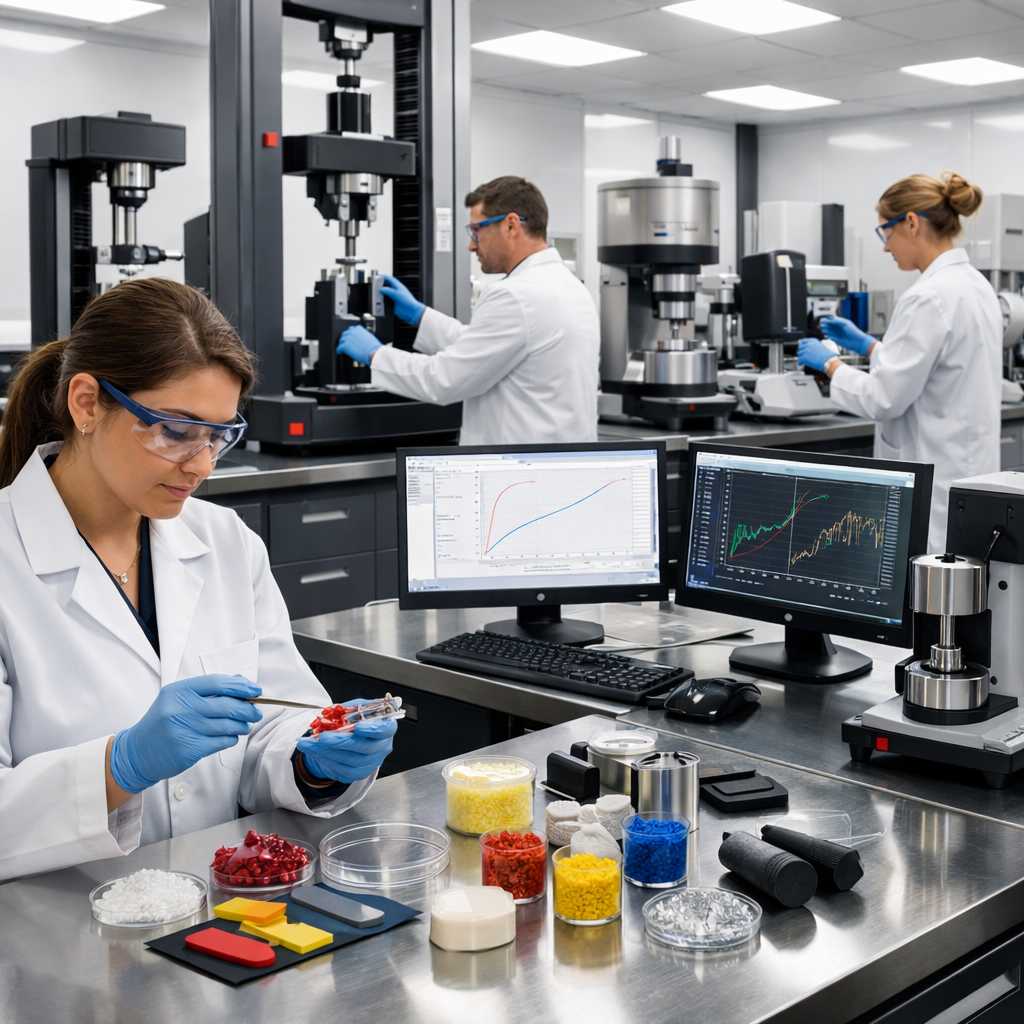
A well equipped polymer testing lab plays a critical role in transforming raw material data into actionable engineering insights. Controlled laboratory environments enable precise measurement of tensile strength, dynamic stiffness, fatigue resistance, and thermal stability. Consistent methodologies ensure repeatable results across projects.
Data generated within a polymer testing lab supports alignment between simulation, component level validation, and full vehicle NVH testing. This integration strengthens development efficiency and reduces discrepancies between predicted and actual performance. Reliable laboratory insights ultimately shape stronger engineering outcomes.
Integrating Polymer Expertise for Superior NVH Results
Transforming polymer insights into measurable refinement gains requires cross functional collaboration. By integrating NVH testing, vehicle dynamics, and polymer testing, manufacturers can address vibration challenges at their origin. Early validation ensures that material behavior aligns with overall performance targets.
Working alongside a rubber research lab enables the optimization of elastomer formulations tailored to specific vibration control objectives. Final validation in a rubber testing lab confirms durability and consistency under operational stresses. Through coordinated NVH testing, vehicle dynamics, polymer testing, and a polymer testing lab, supported by a rubber research lab and rubber testing lab, organizations transform polymer insights into predictable NVH engineering outcomes and enhanced vehicle comfort.
Also Read :