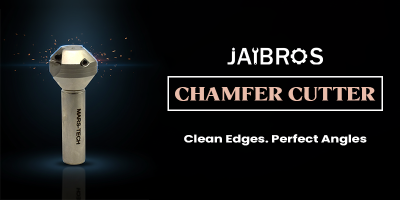
Chamfer Tool in CNC Machining: A Complete Guide
-
Chamfer Tool in CNC Machining: A Complete Guide
In CNC machining, edge quality is just as important as dimensional accuracy. Sharp edges can lead to poor ***embly, safety risks, and premature wear of components. Chamfering is a simple but critical operation that improves part functionality, appearance, and durability. Understanding chamfering techniques and tooling helps machinists achieve consistent and professional results across a wide range of applications.
What Is Chamfering in CNC Machining?
Chamfering is the process of creating a beveled edge between two intersecting surfaces. Instead of leaving a sharp corner, a small angled cut is applied. This bevel improves handling safety, reduces burrs, and allows easier part assembly.
A chamfer tool is specifically designed to perform this operation accurately on CNC lathes and milling machines. Chamfering is commonly applied to holes, external edges, and internal features where parts meet or rotate.
Why Chamfering Matters in Production
Chamfering is not only about appearance—it directly affects performance and reliability.
Key advantages include:
-
Eliminates sharp edges that may cause injuries
-
Improves fit and alignment during assembly
-
Reduces stress concentration at corners
-
Enhances surface finish and visual quality
-
Minimizes edge damage during transport and handling
In precision industries, chamfering is often a required finishing step.
Types of Chamfering Tools Used in CNC Machines
Different applications require different tool designs. Choosing the right option improves accuracy and tool life.
Chamfer Cutter Tool
A chamfer cutter tool is commonly used for general edge breaking and hole chamfering. It is available in various diameters and angles, making it suitable for light and medium-duty machining tasks.
45-Degree Chamfer Cutter
The 45-degree chamfer is the most widely used option in CNC machining. It creates a standard bevel that works well for deburring, edge finishing, and preparing components for assembly.
Chamfer Milling Cutter
A chamfer milling cutter is ideal for milling machines and is often used for larger chamfers or complex contours. It provides excellent rigidity and consistent results in high-speed operations.
Insert Chamfer Tool
An insert chamfer tool uses replaceable cutting inserts instead of a solid edge. This design reduces tooling cost, improves repeatability, and allows quick replacement in high-volume production.
Materials Suitable for Chamfering Operations
Chamfering tools can be applied to a wide range of materials when correct inserts and parameters are selected.
Common materials include:
-
Carbon and alloy steels
-
Stainless steel
-
Aluminum and non-ferrous metals
-
Cast iron
-
Engineering plastics
Adjusting feed rate, spindle speed, and depth of cut ensures clean chamfers without burrs.
Chamfering on CNC Lathes and Milling Machines
Chamfering is used on both turning and milling centers.
On CNC lathes, chamfering is applied to shaft edges, bores, and stepped features. On milling machines, it is used on flat surfaces, pockets, and hole edges. A chamfer tool ensures uniform edge quality across multiple components, especially in batch production.
Selecting the Right Chamfering Tool
Choosing the correct tool depends on multiple machining factors.
Consider the following:
-
Required chamfer angle
-
Workpiece material
-
Machine type
-
Chamfer size and depth
-
Production quantity
For general applications, a 45-degree cutter is sufficient. For repetitive or heavy-duty machining, insert-based designs offer better economy and durability.
Best Practices for Accurate Chamfering
Proper setup and cutting strategy improve results and extend tool life.
Recommended practices:
-
Maintain correct tool alignment
-
Avoid excessive depth in one pass
-
Use stable feed rates
-
Apply coolant for harder materials
-
Ensure proper tool holder rigidity
A properly set chamfer tool produces smooth edges without chatter or tearing.
Common Mistakes to Avoid
Even simple chamfering operations can fail if basic rules are ignored.
Avoid:
-
Using the wrong chamfer angle
-
Applying excessive cutting force
-
Poor tool overhang control
-
Incorrect insert grade selection
-
Skipping chamfering in assembly-critical parts
Attention to detail ensures consistent part quality.
Industrial Applications of Chamfering
Chamfering is widely used across industries such as:
-
Automotive manufacturing
-
Aerospace component
-
Mold and die production
-
Industrial machinery
-
Precision engineering
In these sectors, a chamfer tool plays an important role in meeting functional and aesthetic requirements.
Conclusion
Chamfering is a small machining step with a major impact on part quality, safety, and performance. By selecting the right tooling, applying correct cutting parameters, and following best practices, machinists can achieve consistent and professional results. A well-chosen chamfer tool improves efficiency and ensures clean, reliable edges in CNC machining.
For high-quality cutting tools and CNC machining solutions, jaibros offers a wide range of reliable products designed for modern manufacturing needs.
FAQs
1. What is the most common chamfer angle in CNC machining?
The 45-degree angle is the most commonly used for general chamfering applications.
2. Is chamfering required for all CNC parts?
Not all parts require chamfering, but it is recommended for assembly-critical and safety-focused components.
3. Can chamfering be done on both lathes and mills?
Yes, chamfering operations are commonly performed on both CNC lathes and milling machines.
4. Are insert tools better for production work?
Insert-based tools are more cost-effective and consistent for high-volume machining.
5. Does chamfering affect dimensional accuracy?
When applied correctly, chamfering improves edge quality without affecting critical dimensions.
-