Categories
Tags
-
#android
#linux
#Communication
#Ethernet
#AI
#radar
#industrial
#Autonomous
#1
#Automated guided vehicles
#performance testing
#Machine Vision
#System on Module Market
#T507SBC
#IO Extended Chip
#Pin Multiplexing
#HMI
#Processor
#AM6254
#Ai Technology
#OKA40i EVK
#Forlinx
#NIC software problems
#PHY communication
#Rockchip RK3588
#OpenSSL
#i.MX8M Plus EVK
#Batch Mode
#Root account
#Password change
#imx93
#Single board computer
#iMX 8M Plus
#imx8mp SoM
#imx8 system on module
#Rockchip SoM
#RK3588J
#RK3568j
#RK3399
#iMX6UL System on Module
#i.MX6UL SoM
#ARM Cortex-A7
#JH7110 processor
#Forlinx Embedded
#RISCV
#Allwinner
#processors
#System on Modules
#SoMs
#level quality
#iMX9352 single board computer
#Secure communication
#Interface protection
#Embedded Single Board Computer
#Hardware and software services
#RSU
#V2X roadside system
#Agricultural Plant Protection UAV
#Forlinx i.MX8M Plus SoM
#Precision Farming
#rk3568 som
#OKMX8MP
#SPI to CAN
#MCP2518 chip
#Driver porting
#Robot control system
#Industrial grade
#Drivers
#Special robots
#Intelligent inspection robot
#Real time
#USB Gadget
#RK3568 Development Board
#RNDIS Driver
#USBNET
#Network Communication
#NVR
#Intelligent Security Surveillance System
#AI Computing Power
#Video Surveillance System
#System on Module
#JH7110
#embedded products
#RISC-V
#SPI FRAM chip
#Forlinx OK3568C Development Board
#Data storage
#Road sensors
#vision fusion
#Intelligent transportation
#i.MX8MP SoM
#NXP
#Multi axis robot control
#FET3568JC SOM
#ARM architecture
#RK3568
#Allwinner T507H
#Samba
#cross platform file sharing
#OKT507C
#E ink electronic bus stop sign
#imx6ull som
#High visibility
#FET3588C CPU Board
#industry Intelligent manufacturing
#8K panoramic camera
#RK3588
#Debian 11
#Development Board
#Embedded
#Character devices
#Block devices
#Network equipment
#LT8912B
#MIPI
#LVDS
#HDMI output
#OK7110C development board
#7110 SBC
Archives
Introduction to Embedded Single Board Computer
-
Posted by Forlinx Embedded Filed in Technology #Processor #Embedded Single Board Computer #Hardware and software services 56 views
An embedded Single Board Computer is a complete circuit board that integrates a processor, memory, interfaces, clocks, and other auxiliary circuits. It is commonly used to create embedded systems, such as those used for controlling robots, automobiles, or industrial equipment.
Here is an introduction to embedded Single Board Computers and some tips on how to use and choose the right one:
01 What is an Embedded Single Board Computer?
A Single Board Computer is a circuit board used for developing embedded systems. It includes a central processing unit (CPU), memory, input devices, output devices, data pathways/buses, and external resource interfaces, among other hardware components. It serves as a platform for cooperation within the semiconductor industry, providing manufacturers with essential low-level hardware, system, and driver resources. This eliminates the need for users to invest manpower and time to complete these low-level tasks. Common types of Single Board Computers include 51, ARM, FPGA, and DSP. Forlinx is dedicated to the development and service of ARM architecture Single Board Computers.
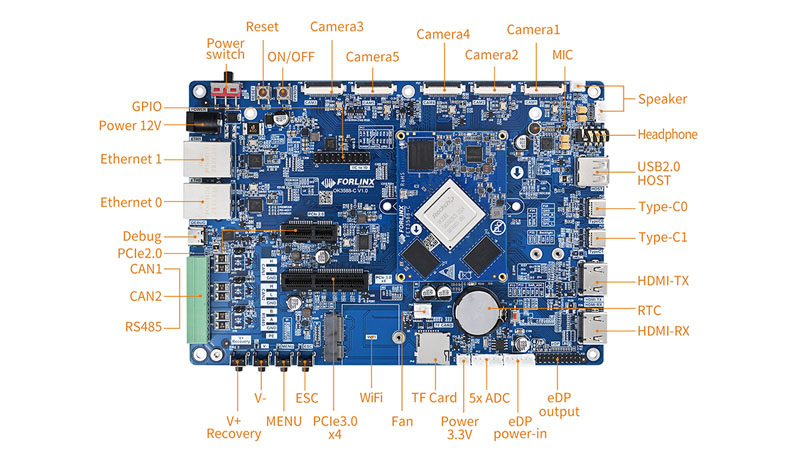
Single Board Computers, in concept, are very similar to software outsourcing. In terms of embedded products, the hardware, boot code, drivers, file systems, protocol layers, and basic application software are considered common and generic components of electronic products. They do not encompass the key technologies that differentiate the product. In this era that emphasizes division of labor and cooperation, if the workload in this area is significant or if a manufacturer lacks relevant development personnel, they can choose to outsource these development tasks to a third-party. This accelerates the product development process and enables quick time-to-market, seizing a competitive advantage.
Forlinx Embedded Single Board Computer integrates all the core functional circuits commonly found in embedded products. It combines the processor with RAM, Flash memory, power management, LCD, Ethernet, USB, and other universal interfaces into a compact, reliable, and electromagnetic-compatible electronic motherboard. By adopting a SoM for product development, you can avoid complex processor development, BGA design, high-speed PCB routing, design verification, EMC compliance design, as well as save the effort required for extensive board debugging and BSP (Board Support Package) development work.
When selecting a Single Board Computer, you are actually choosing not just a hardware board and the resources it provides, such as source code, but also choosing a partner, a collaborator who provides software and hardware services to users.
Similar to the cooperation model of software outsourcing, the collaboration between users and suppliers in this case is primarily focused on software cooperation. It requires thorough communication between the user and the supplier to understand the specific requirements of the product. The supplier needs to continuously allocate personnel according to the user's needs to ensure effective collaboration.
During the process of supporting customers in product development, Forlinx often encounters issues such as modifying the file system, serial port testing, upgrading Flash memory from 64MB to 128MB, etc. In most cases, these issues need to be resolved through software solutions. This forms a high level of interaction between embedded industry suppliers and customers in terms of after-sales support and customer development.
In other words, embedded Single Board Computers serve as the medium for user's software outsourcing. Compared to traditional software outsourcing, Single Board Computers actually provide users with value in terms of both hardware and software services.
02 How to Use an Embedded Single Board Computer?
Using an embedded Single Board Computer requires some knowledge of hardware and software. Here are a few steps to help you get better at using embedded Single Board Computers:
- 1. Understand the specifications and features of the Single Board Computer, read relevant documentation and manuals, or study relevant tutorials.
- 2. Familiarize yourself with the programming language and IDE environment you will use.
- 3. Write code, connect hardware, debug the program, and validate the results. This includes tasks such as GPIO control, PWM waveform output, serial communication, and short message transmission.
03 How to Choose an Embedded Single Board Computer?
Choosing the right embedded Single Board Computer can greatly improve development efficiency. Here are some factors to consider when purchasing an embedded Single Board Computer:
- 1. Processing power: Consider the specification and performance of the board’s processor to ensure it can handle your application’s requirements. ARM Cortex series should be given priority consideration because they have extensive support and ecosystem.
- 2. Interfaces and expand-ability: It is important to determine which peripherals need to be added based on your project requirements. Check if the Single Board Computer has relevant general-purpose input/output (GPIO) and expansion interfaces. It is also beneficial to consider the compatibility with operating systems and network connectivity components.
- 3. Cost: This can be an important factor for budget-conscious projects, but it's important not to focus solely on price. Quality should be a priority consideration. You can also explore options such as using older models that have already been released, which may help reduce costs.
- 4. Support and maintenance: Look for a reliable supplier or manufacturer that offers timely technical support and maintenance services. Having a strong support team can definitely help you solve problems and overcome challenges.
- 5. Estimated life-cycle: Consider the life-cycle of the Single Board Computer. Choosing a product with long-term support is indeed crucial to ensure ongoing support and availability of replacements in the future.
- 6. Hardware and Software Ecosystem: Consider the ecosystem of the Single Board Computer, including development tools, documentation, community support, and third-party software and hardware support. Indeed, a strong ecosystem can greatly reduce development time and difficulty.
- 7. User feedback and reviews: Look for user feedback and reviews about the Single Board Computer to understand the experiences and suggestions of other developers. Searching for user feedback and reviews about the Single Board Computer to understand the experiences and suggestions of other developers.
In general, choosing an embedded Single Board Computer requires considering multiple factors such as performance, interfaces, ecosystem, cost, and support. Exactly, it's important to choose the Single Board Computer that suits your application's specific requirements and goals. This ensures that the chosen board is well-suited for the intended purpose.
Embedded Single Board Computers serve as the medium for user's software outsourcing. Compared to traditional software outsourcing, Single Board Computers actually provide users with value in terms of both hardware and software services.
More Embedded Single Board Computer
Originally published at www.forlinx.net.